Agentic work with return
I install agents that recover time, capture opportunities, and execute repeated work for you.
You do not need to know OpenClaw or Hermes. You need to identify which work steals time, money, or follow-through, then turn it into an installed capability you can direct.
The real product is not “AI”. It is diagnosis, installation, security, training, and measurable return.
The new way to work
The person stops doing everything manually and starts directing agents.
An installed agent executes, remembers, reviews, reports, and follows up inside defined limits. OpenClaw and Hermes are infrastructure; the sale is won when the client sees the concrete problem solved and the return measured.
Do not sell technical novelty: sell a new installed capability inside the operation.
Do not sell “AI for everything”: choose a few clear, visible, lower-risk use cases first.
Do not promise blind autonomy: design permissions, human review, limits, and measurement from day one.
Why now
The market is moving toward human-agent teams, but still needs trustworthy installation.
The commercial opportunity is translating agentic infrastructure into practical return: less manual work, stronger follow-through, more speed, and better control.
of leaders expect to use AI to expand workforce capacity in the next 12 to 18 months.
of organizations are experimenting with agents, while value scales best around focused use cases.
of advanced GenAI initiatives meet or exceed ROI expectations when governed and scoped well.
productivity lift observed in AI-assisted support teams, a sellable signal for repeated workflows.
speed and quality gains on tasks inside the AI frontier when the work is framed correctly.
saved per week by trained users, close to one recovered workday.
How it looks installed
Three demos so buyers see the capability, not only the promise.
Each demo shows the before state, the agent, and the reviewable output. The goal is for someone to imagine their own work moving with less friction.
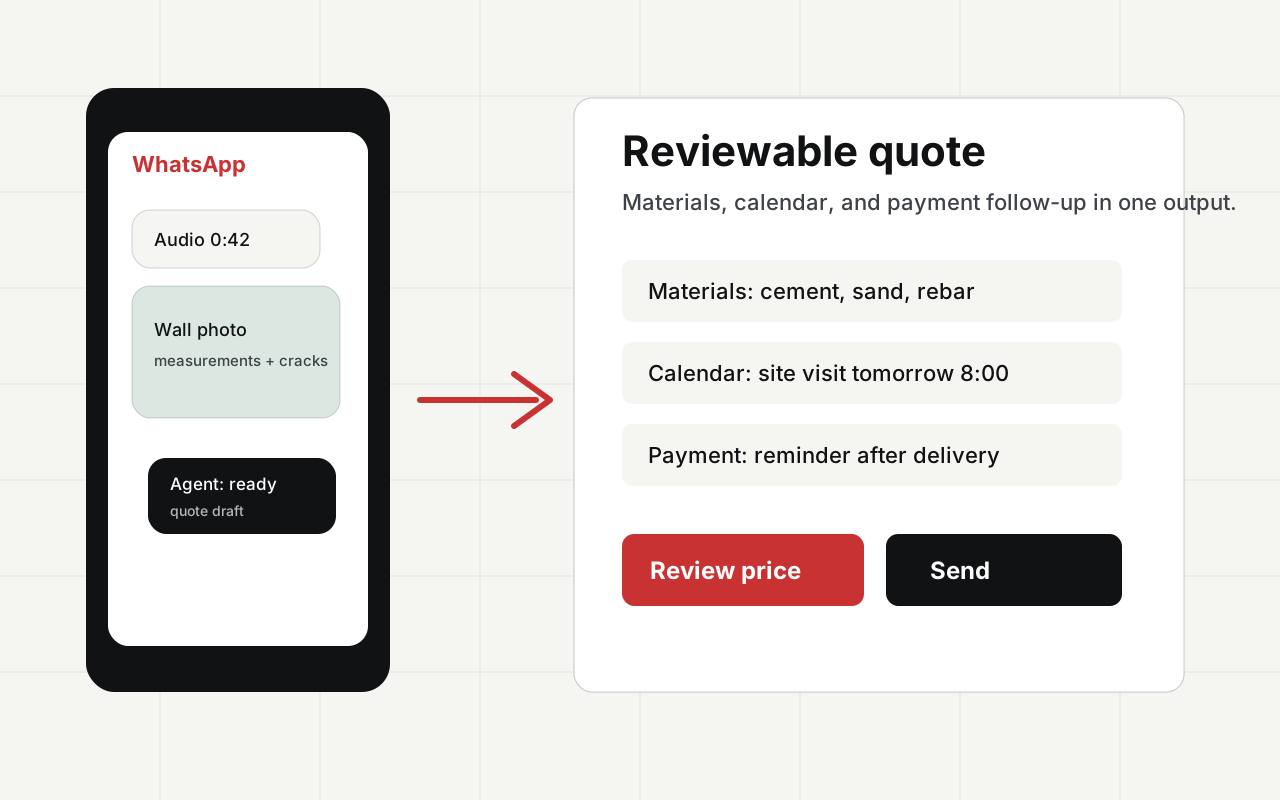
From audio and photo to reviewable quote.
- Before
- Audios, photos, and measurements stay scattered in WhatsApp after the workday.
- Agent
- The agent structures the request, lists materials, builds the calendar, and prepares the draft.
- Output
- A reviewable quote with payment reminder and next step for the client.
- Metric
- Quotes sent per week and administrative hours recovered.
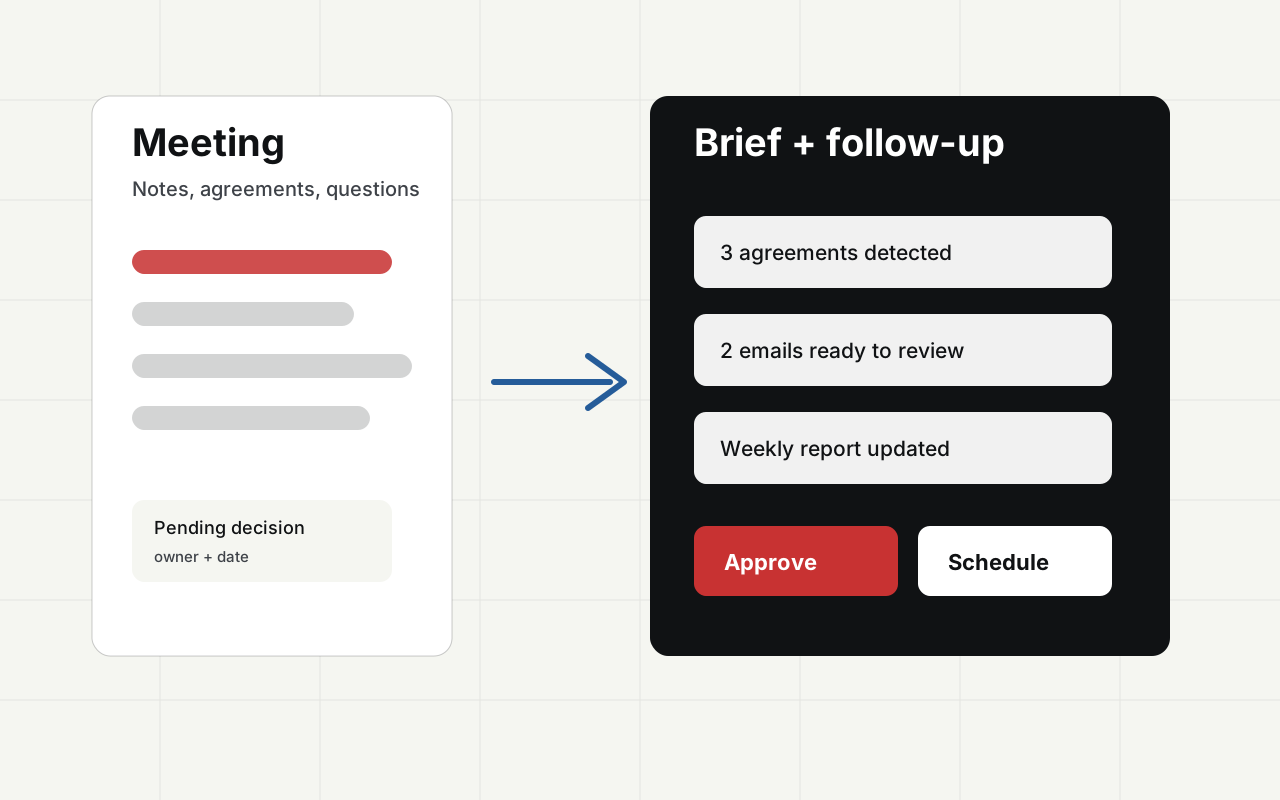
From meeting to agreements, emails, and weekly report.
- Before
- Decisions live in notes, email, and memory until they go cold.
- Agent
- The agent detects agreements, drafts follow-ups, and prepares the next work-block brief.
- Output
- Visible pending work, messages ready to approve, and weekly report updated.
- Metric
- Owned agreements, follow-ups sent, and overdue tasks avoided.
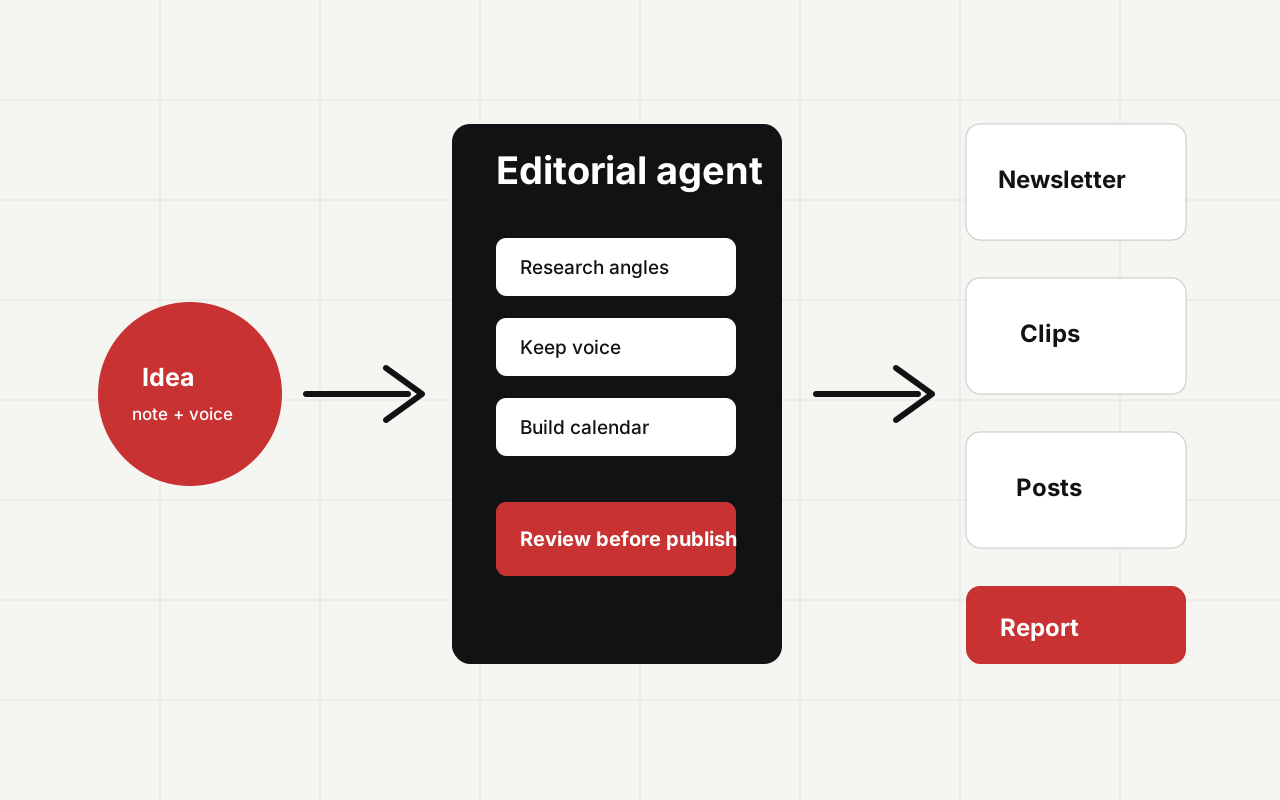
From one idea to newsletter, posts, clips, and report.
- Before
- The idea gets stuck between research, calendar, editing, and distribution.
- Agent
- The agent proposes angles, preserves voice, builds the editorial queue, and prepares reviewable assets.
- Output
- A content package ready for human review and weekly publishing.
- Metric
- Assets per idea, consecutive weeks, and opportunities answered.
Return library
Use cases someone understands even if they have never heard “OpenClaw” or “Hermes”.
Each case is sold by problem, agent, return, metric, risk, and next step. The technology comes after as the infrastructure that makes the promise viable.
No cases match that combination. Change a filter to explore another route.
Voice notes and photos converted into quote, materials, and follow-up.
- Problem
- The work continues at night: replaying audios, reviewing photos, pricing jobs, remembering payments, and not losing clients.
- Installed agent
- A WhatsApp agent that turns voice notes and photos into quote drafts, material lists, calendar items, daily reports, and reminders.
- Return
- More quotes sent on time, fewer forgotten materials, and less admin after the job site.
- Metric
- Quotes sent per week, admin hours saved, and payments recovered.
- Controlled risk
- Human validation of pricing, scope, and availability before a final quote is sent.
One idea converted into newsletter, clips, posts, script, and report.
- Problem
- Good ideas exist, but research, editing, distribution, and commercial follow-up break consistency.
- Installed agent
- An agent that researches, calendars, repurposes content, prepares newsletter drafts, finds sponsors, and summarizes community signals.
- Return
- More assets per idea without losing voice or relying on manual energy every day.
- Metric
- Assets per idea, consecutive publishing weeks, and commercial opportunities answered.
- Controlled risk
- Human review of voice, promises, claims, and sensitive material before publishing.
Daily brief and agreement follow-through without relying on memory.
- Problem
- After meetings, agreements, key emails, and decisions disappear before becoming next steps.
- Installed agent
- An agent that prepares briefs, reads permitted context, summarizes meetings, drafts follow-ups, and builds weekly reports.
- Return
- Less follow-through leakage, better use of high-value time, and decisions with context.
- Metric
- Closed agreements, overdue tasks avoided, preparation hours, and follow-ups sent.
- Controlled risk
- Dedicated-account permissions, review of external messages, and limits on confidential information.
Leads answered, classified, and followed up before going cold.
- Problem
- The lead arrives, no one answers quickly, the CRM is incomplete, and the opportunity is lost through weak follow-up.
- Installed agent
- An agent that triages leads, answers first questions, updates the CRM, prepares proposals, and revives cold opportunities.
- Return
- Lower response time, more recovered opportunities, and fewer forgotten leads.
- Metric
- First-response time, leads without follow-up, proposals sent, and recovered deals.
- Controlled risk
- Tone policies, discount limits, and human approval for commercial commitments.
Invoices, documents, reports, and pending work coordinated across tools.
- Problem
- The operation runs on copy-paste, manual reminders, scattered documents, and late reports.
- Installed agent
- An agent that reviews documents, prepares reports, coordinates tools, detects changes, and controls pending work.
- Return
- Less repeated work, fewer administrative errors, and more visibility for decisions.
- Metric
- Errors corrected, coordination hours, documents processed, and overdue tasks.
- Controlled risk
- Start with non-critical data, action logs, and human review for payments, contracts, or sensitive changes.
Review, QA, release notes, documentation, and incidents with less final friction.
- Problem
- The team ships, but review, documentation, QA, and communication pile up at the end of the cycle.
- Installed agent
- An agent that reviews PRs, drafts release notes, generates incident reports, updates tickets, and prepares QA.
- Return
- Cleaner delivery cycles, less friction before release, and better traceability.
- Metric
- PRs reviewed, defects found before release, documentation time, and tickets closed.
- Controlled risk
- Minimal repository scopes, tool allowlists, and human approval before merge or deploy.
Return calculator
Estimate how much monthly value the first agent could unlock.
This is not a fixed promise; it is a diagnostic conversation starter. It grounds price against recovered time, captured opportunities, and avoided errors.
Estimated monthly return $0
Annual potential $0
From recovered time alone $0
Typical first-sprint range US$1,500 - US$4,500
Real measurement is adjusted after 30 days of usage with data from the installed case.
Send this return for diagnosisOffer
What you actually buy: installation with return, security, and transfer.
Infrastructure matters, but the purchase closes when someone sees their problem turned into a system they can use, measure, and control.
Agentic Return Diagnosis
Identify the first installable case with clear return and controlled risk.
- Map of repeated work and lost value
- First prioritized use case
- Return metric and risks
- Install or do-not-install recommendation
First Agent Installed
Install one concrete capability with channels, permissions, human review, and runbook.
- Agent configured with OpenClaw or Hermes
- Initial workflow with clear inputs and outputs
- Permissions, limits, and approval criteria
- Operational handoff so it can run without depending on me
30-Day Optimization
Measure real usage, improve prompts/skills, and decide whether expansion makes sense.
- Review of usage and real friction
- Prompt, skill, and limit adjustments
- ROI report and recommendations
- Expansion plan for the second use case
Infrastructure I can install
OpenClaw and Hermes are presented as engines, not the primary promise.
The technical section appears after return cases. That way the audience first understands the solved problem, then the infrastructure that makes it possible.
OpenClaw
A layer for agents with tools, controlled execution, workflows, and documented security for practical automations.
Hermes Agent
A customizable agent for executing tasks, coordinating tools, and operating with explicit security configuration.
System around it
Dedicated accounts, least privilege, logs, review criteria, documentation, and training so the agent does not depend on magic.
Weekly Operator
A weekly editorial to sell the new way of working without empty technical language.
Each edition grounds a real problem, which agent would be installed, what return it creates, what stays human, and what risk is controlled.
- Real problem
- Which agent would be installed
- What return it creates
- What must stay human
- Which risk must be controlled
- CTA: Diagnose my case
Sources
Research used to sell return, not noise.
These sources support the commercial framing: agentic adoption, observed productivity, ROI, security, and installable infrastructure.