Systems DeliveryRolled out, stabilized, and removed a live Paperclip company correctly
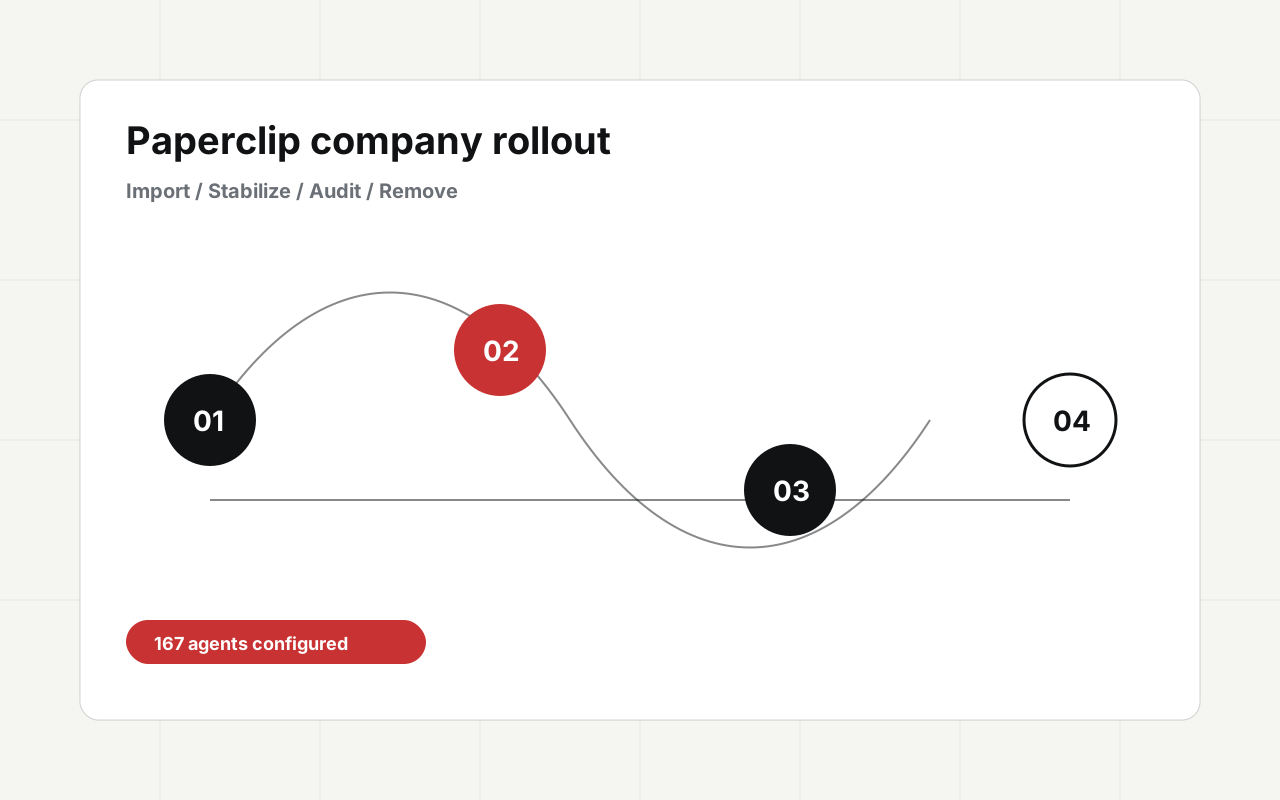
Imported and configured a large multi-agent company, tested execution end to end, audited failure modes, then removed it cleanly after the evidence showed it was the wrong long-term shape.
Why this was hardThe difficult part was not launching many agents; it was proving which operating shape deserved to survive.
BeforeA broad company model looked impressive but carried setup drag, unclear lifecycle cost, and execution ambiguity.
AfterThe setup was stabilized, tested, audited, and removed cleanly when evidence argued against scale.
Buyer relevanceShows judgment under pressure: install, verify, debug, and shut down the wrong system when the evidence says so.
Sanitized receipts- Sanitized company import map
- Execution QA notes
- Lifecycle removal checklist
- Architecture decision record
Operator moveArturo stabilized the rollout, audited execution quality, corrected lifecycle issues, and removed the setup cleanly instead of defending the wrong architecture.
OutcomeShowed install discipline, platform debugging, lifecycle control, and the judgment to shut down a system that should not scale. A serious operator must be willing to remove the wrong system after the evidence is clear.
Engineering OperationsValidated a compact delivery squad through a real execution cycle
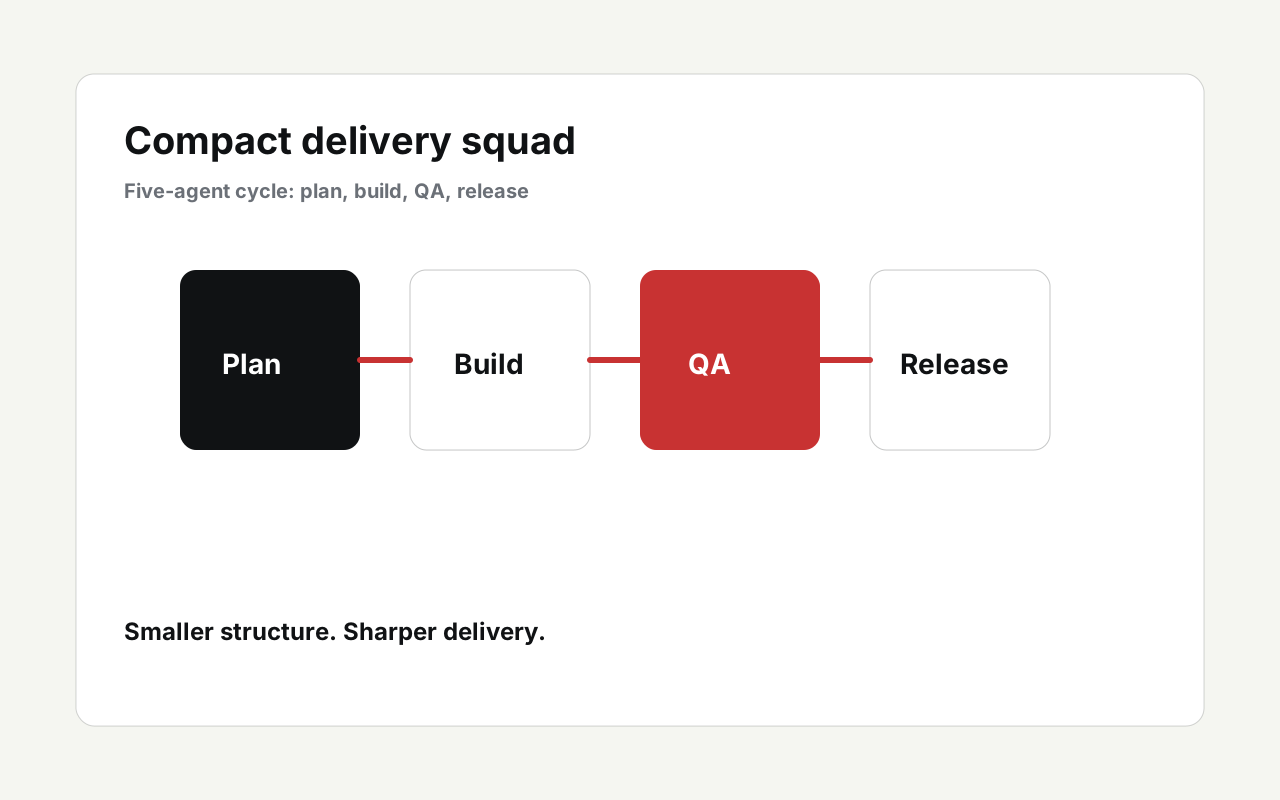
Switched from an oversized company model to a tighter technical squad, then used it to move implementation, QA, release-note production, and lifecycle handling through a live workflow.
Why this was hardThe squad had to support real delivery work without turning the workflow into more coordination overhead.
BeforeThe earlier company model spread responsibility across too many roles and made the delivery path harder to read.
AfterA smaller technical squad moved planning, implementation, QA, release notes, and lifecycle handling through one cycle.
Buyer relevanceShows that the work is not more agents; it is the right operating structure for the delivery problem in front of the team.
Sanitized receipts- Sanitized role map
- Delivery cycle checklist
- QA and release-note trail
- Lifecycle owner notes
Operator moveArturo used a compact technical squad to run a real delivery cycle and validate sharper agent coordination.
OutcomeProved that smaller, sharper agent structures can beat bloated setups when the goal is actual delivery. Better agent systems are usually narrower, easier to inspect, and closer to the real handoff.
Content SystemsHardened a YouTube production pipeline into a repeatable system
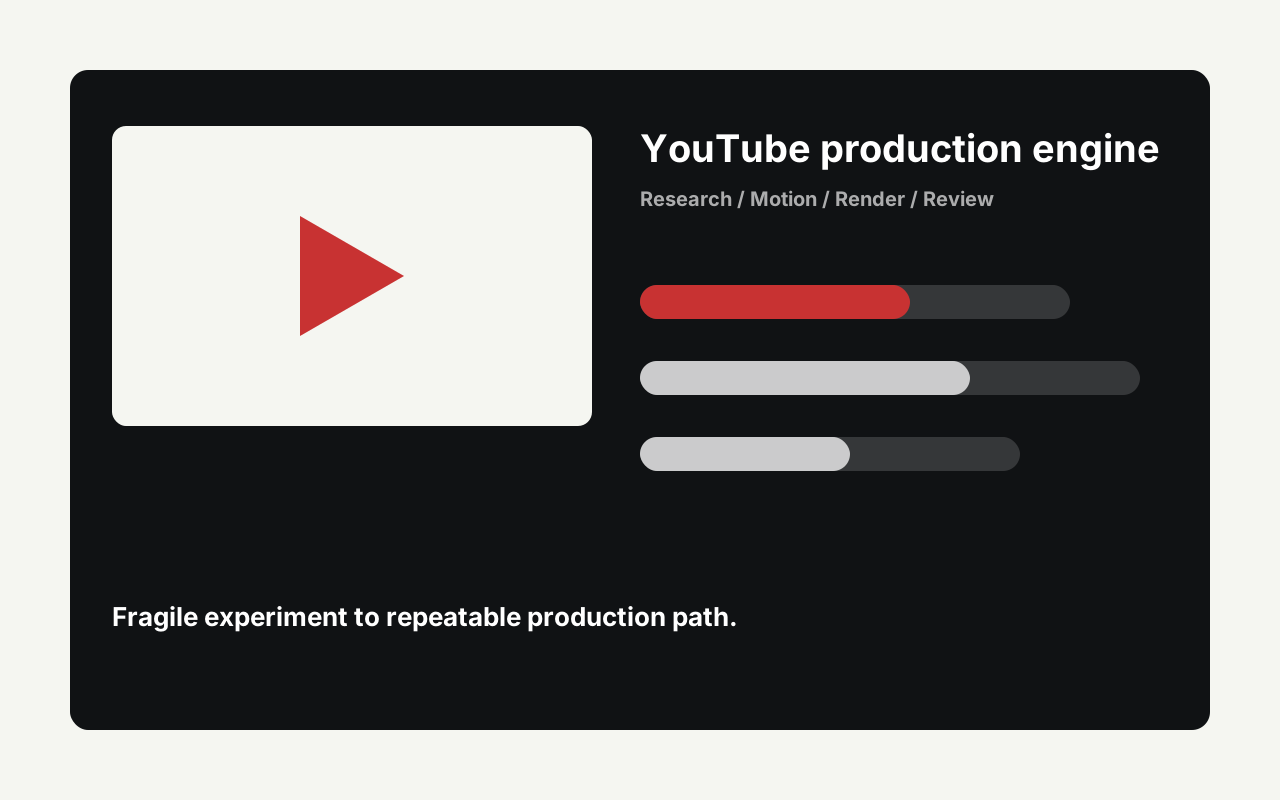
Improved a live content pipeline with motion policy controls, multi-engine rendering, and execution rules that turned fragile experimentation into a usable production path.
Why this was hardThe pipeline needed to preserve taste and accuracy while moving faster through research, motion, render, and review.
BeforeProduction depended on fragile experimentation, manual corrections, and unclear render/review rules.
AfterThe workflow gained motion policy, rendering constraints, QA expectations, and a clearer path to publishable output.
Buyer relevanceShows practical system hardening: fewer fragile demos, more repeatable production behavior.
Sanitized receipts- Sanitized production map
- Motion policy checklist
- Render path comparison
- Review gate notes
Operator moveArturo tightened execution rules, rendering paths, motion policy, and QA expectations around the pipeline.
OutcomeTurned an abstract content automation idea into a workflow with constraints, review points, repeatable outputs, and a path to quality improvement. Content systems win when constraints are explicit enough for the operator to trust the next run.